



Looks Great, Tastes Mid.
The thinking behind the podcast.
The thinking behind the podcast.
How a bad bowl of udon turned into a podcast
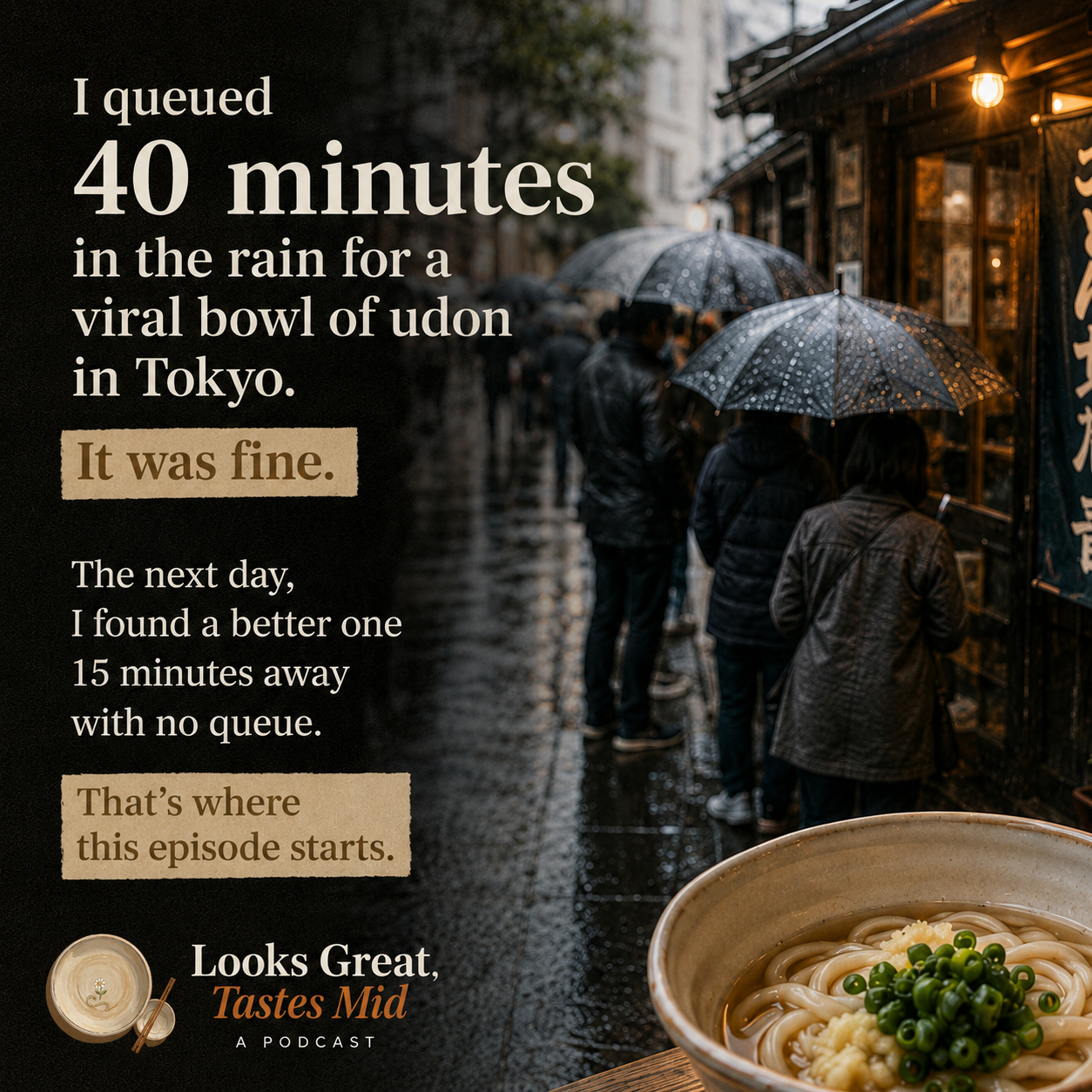
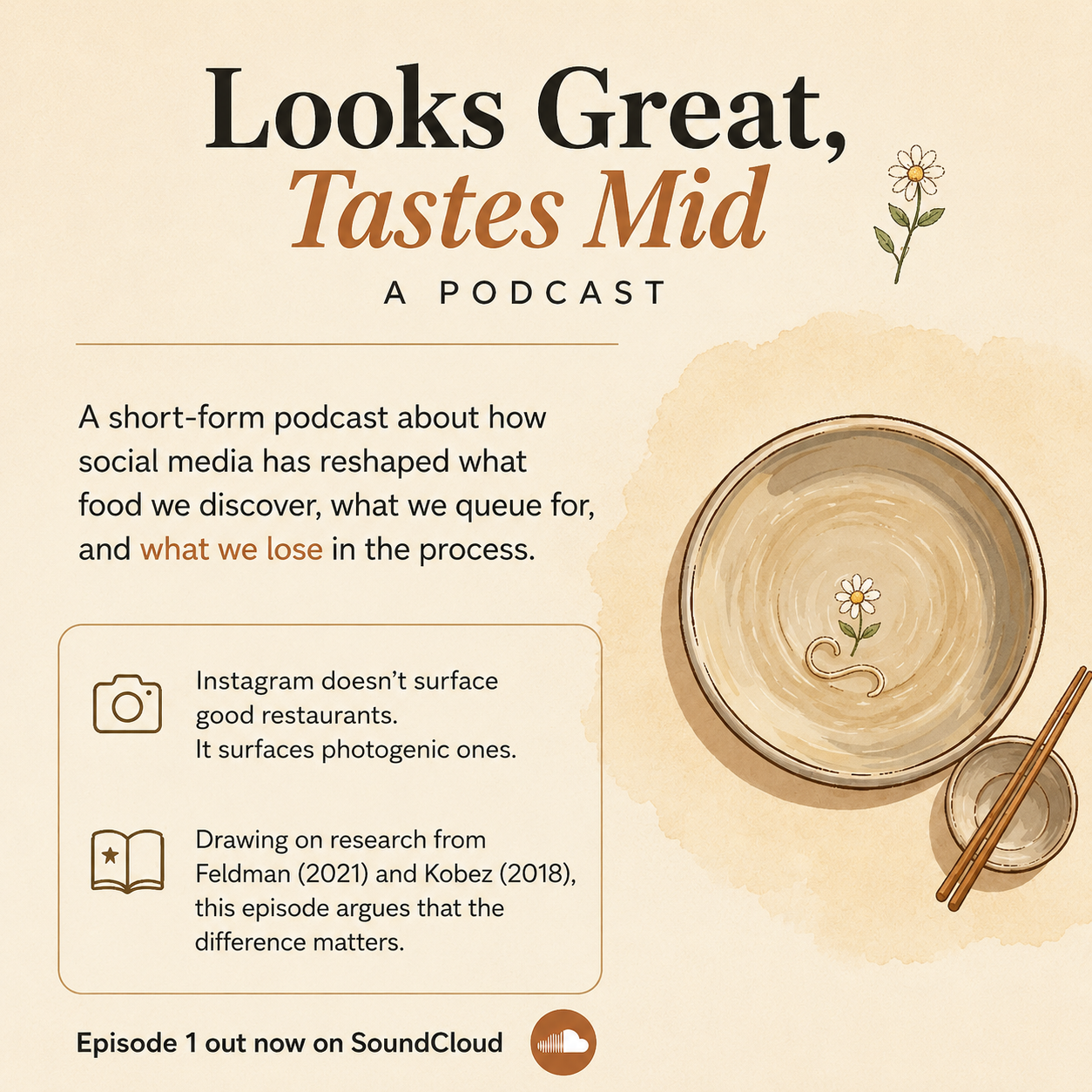
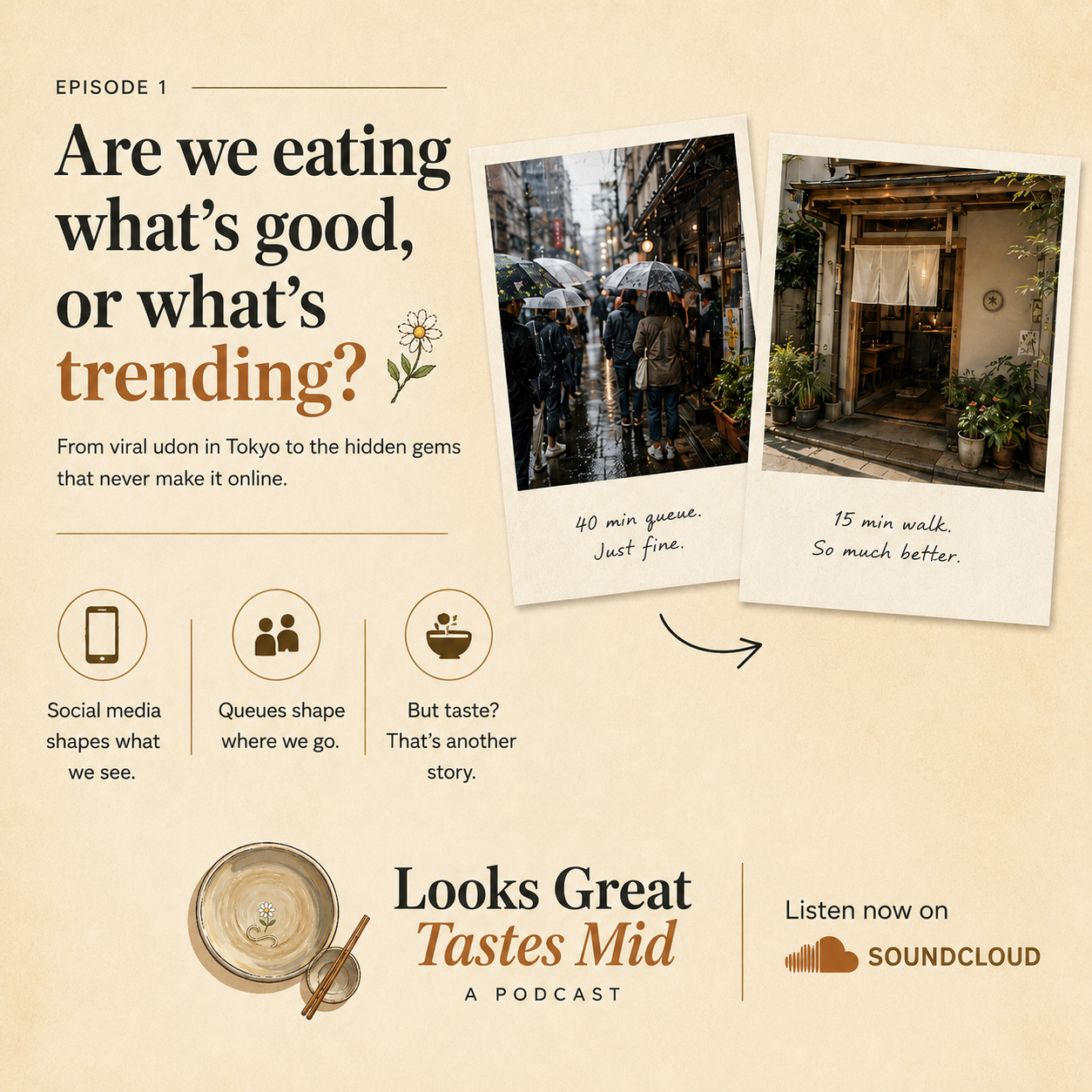
I queued forty minutes in the rain for a viral bowl of noodles in Tokyo last year. It was fine. Just fine. The next day I found a better one fifteen minutes away with no queue. That’s the moment that became Looks Great, Tastes Mid, a podcast about how social media has reshaped what food we discover, what we queue for, and what we lose in the process.
Why a podcast, and why this argument
The choice to make this a solo podcast wasn’t accidental. McHugh (2022) argues that audio is “the most intimate of mediums” (p. 64), where listeners can detect how someone feels, not just what they say. For an argument with a clear position, one that asks listeners to question their own scrolling habits, that intimacy mattered. A video would have made it a lecture. A blog post would have made it an opinion piece. A podcast lets it sound like a conversation you’d have with a mate who’d just got back from a trip. McHugh (2022) notes that podcast listeners have “actively chosen to listen” (p. 65), which gave me the confidence to take a position rather than survey perspectives neutrally.
The argument itself draws on two pieces of cultural studies research. Feldman (2021) found that on Instagram, “a restaurant is positioned as ‘good’ simply by being the subject of an Instagram post” (p. 1351), there’s no quality filter, just visibility. Kobez (2018) extends this, showing how digital disruption has eroded the disinterested professional criticism that used to surface genuinely good places, replacing it with a PR-driven hosting model that blurs amateur and paid content. Together, these sources gave me a framework for an argument that started as personal disappointment and ended as media critique.
Strategic choices across three pieces of media
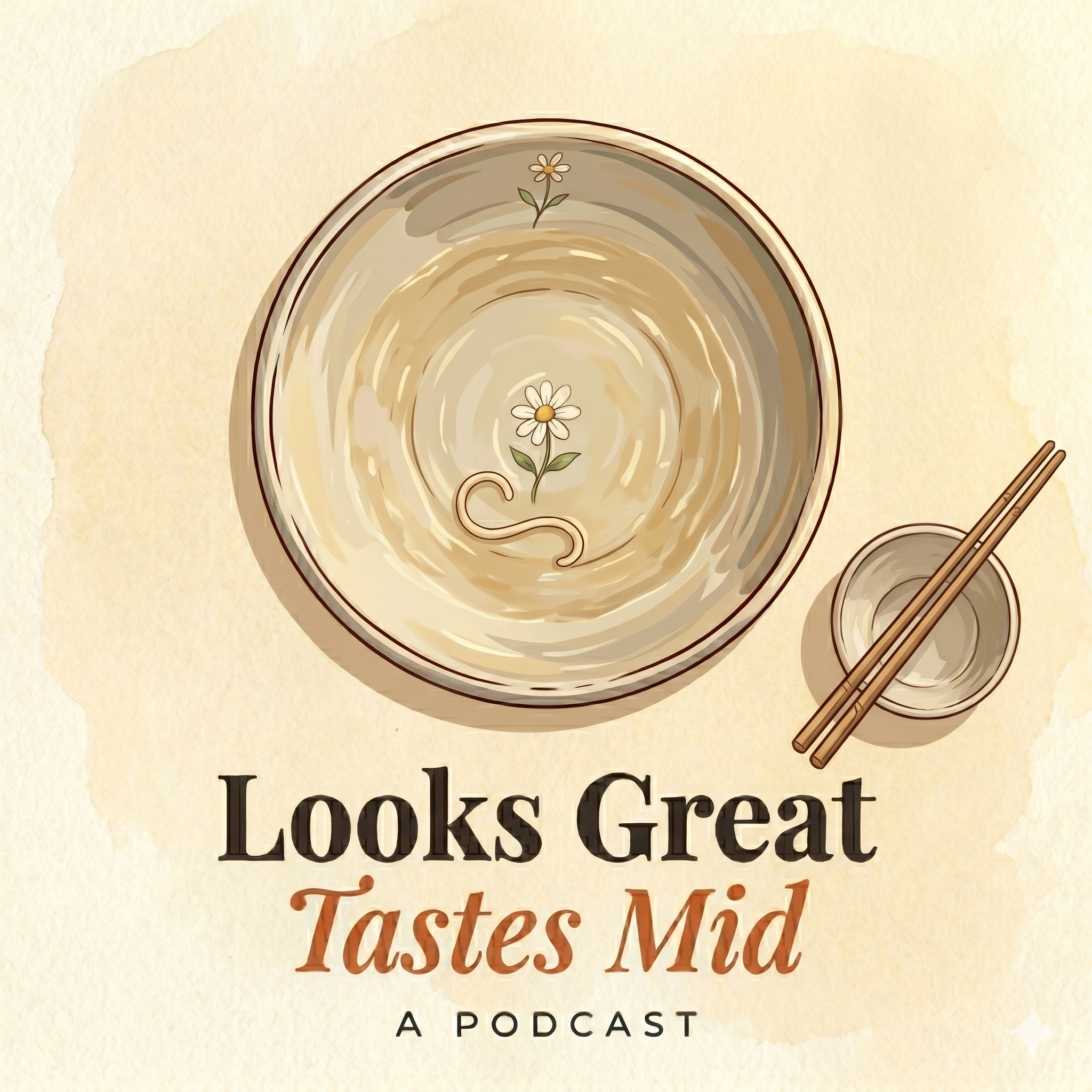
The campaign uses one polished element and lets everything else stay raw. The empty-bowl logo, generated in Canva from a brief I wrote, anchors the brand identity across all three Instagram posts. But the content inside each post is deliberately under-produced: real phone footage of me actually eating the udon I talk about in the podcast, paired with simple captions. Sutherland (2024) is firm that “pushing the same content out across different platforms without optimising it for the specific characteristics of each one is strongly discouraged” (p. 400), and on Instagram, the specific characteristic that matters most is that audiences scroll past anything that looks like branded marketing. The unpolished aesthetic isn’t a shortcut. It’s the argument enacted in the form: a campaign critiquing slick algorithmic food content can’t itself look slick.
What worked, what didn’t, what I’d change
Two creative decisions earned their place. The first was leading the podcast with a specific personal anecdote rather than an abstract argument. Sutherland (2024) describes the lead as “the most important part of social media copy” (p. 396), a principle that translates directly to audio. The Tokyo opening let me earn the bigger claim that followed. The second was using real footage with light captions instead of staging anything. I’d considered re-creating the meal at home for cleaner shots, but the rawness of the actual experience is exactly what the campaign needed.
The weakest part was audio editing. CapCut handles voice well, but I underestimated how much time it takes to cut out every “um” and breath sound, things that are invisible in conversation become excruciating in a six-minute episode. Next time, I’d record in shorter takes and clean as I go, rather than recording the whole script and editing at the end.
Where this leads
The skills I built here, audio production, platform-specific writing, knowing when not to over-design, sit at the heart of digital content roles. More than that, this project taught me to think critically about the platforms I want to work on. That’s the bigger takeaway: making good media means understanding why most media isn’t.
References:
Feldman, Z. (2021). ‘Good food’ in an Instagram age: Rethinking hierarchies of culture, criticism and taste. European Journal of Cultural Studies, 24(6), 1340–1359. https://doi.org/10.1177/13675494211055733
Kobez, M. (2018). ‘Restaurant reviews aren’t what they used to be’: Digital disruption and the transformation of the role of the food critic. Communication Research and Practice, 4(3), 261–276. https://doi.org/10.1080/22041451.2018.1476797
McHugh, S. (2022). The power of podcasting: Telling stories through sound.
Sutherland, K. E. (2024). Strategic social media management: Theory and practice (2nd ed.). Springer.
Media Credits:
• All posts designed by me using Canva (https://www.canva.com/en_au/) under the Canva Free Content License Agreement.
• Podcast edited in Cacput using original music.
• Caption, hashtags, alt-text and overlay copy: written by me.
• SoundCloud logo was used under their media kit license (https://community.soundcloud.com/company/media-kit).